
A loupe? - PART ONE
What’s a loupe and why do I need one?
Whenever I’m looking through coins at my favourite coin shop, I am not without a trusty loupe. To some, a loupe is merely a magnifying glass. As you start looking into loupes, you soon realize there are primarily two design types. Each with their own unique features. They come in seemingly endless choices that can be easily overwhelm you.
A loupe is a handy (typically foldable) magnifier. They’re used for various applications and come in all sizes, focal range and shapes.
This article with focus on loupes normally used in numismatics.
Loupes can feature a single or compound (multi lens) design.
Coddington:
A single lens (known as a Coddington) has an exceptional wide field of view at low magnification. Because of their single lens design, a Coddington loupe is usually much thinner. Smaller ones can fit easily in a pocket. They are typically used to see a wider field of view. It is designed to look at as much of the object as possible. Because of this, Coddington loupes typically lack higher magnification.
Hastings:
If you want to focus in on a particular area of an object, then a multi-lens loupe is required. These loupes use two or three lenses mounted on top of each other to form a single compound lens capable of very high magnification. These multi-lensed loupes are known as Hastings Double or Triplet loupes. I should mention that “Hastings Triplet” is a type of compound lens loupe design and not a manufacturer. The term “triplet” indicates it has three lenses in sequence that together produce the desired results. Higher quality Hastings also differentiates themselves from others due to the addition of high quality colour corrective (achromatic) lenses that are used. Some cheap plastic magnifiers are marketed as Hastings but they’re really just encompassing the overall design and typically don’t include colour corrective lenses.
Most loupes fold into a case to protect the optics from damage.
With this basic information you can now determine what will suit your needs. What exactly do you want to see? Do I want to look at the whole coin or specific areas?
Once you decide on the type of loupe you want, in your haste you start shopping around solely based on price. DON’T do it! While price could be a determining factor, it should not be the starting point. Take a look at the lens quality and specifically how well you can see the object.
When you shop at a quality optical retailer, many vendors have you look at checkerboard grid lines. It soon becomes apparent why.
What people don’t realize is cheaper lenses can distort the image along the edges. Some inexpensive loupes distort more than just the edge of the image! Lens quality could lead to consistent or disappointing results. This should be your primary consideration.
You don’t have to spend a fortune on a quality loupe but you need to be accustomed to using one. Over the years I learned you don’t need massive focal power to get satisfactory results.
A 5-10x power magnification is all you will need. But wait!; Not all loupes are created equal. Advertised power isn’t necessarily accurate. Factors like the number of lenses, the lens material used can have a direct impact on what you see - and how clearly you see it. The case could be plastic, aluminum or even brass. The lens(es) can also be plastic or glass. There are hundreds of manufacturers to choose from and 95% available will give you “adequate” results. While you might have visual distortion, colour reproduction or abhorrations, the average person wouldn’t notice until they’ve had the chance to look through a high quality loupe.
A lower powered loupe with quality glass lenses will almost always produce better visual results than a cheaper higher powered alternative made with plastic lenses. Again, for most people, this might not be a problem.
Unless you have experience using a loupe and know the product and vendor by reputation, buying online can be a gamble.
Never having used one, you might be satisfied with 95% of the loupes out there until you actually use the other 5%. The 5% have exceptional optics with no visible distortion and are extremely well made.
Aside from the quality of the magnification you will need to consider the field of view. The higher the magnification, the closer you will need to be to the coin - which dramatically reduces the visual area you can see. To compensate for this, loupes come in various diameters to help you maximize the visual area you’re after.
Companies like Nikon, Bausch & Lomb along with Carl Zeiss have a long history producing quality optics for cameras, scopes and even eyeglasses.
Their lens products always feature highly polished glass lenses and when matched with a suitable holder, you will have an incredible product that will last a lifetime. These loupes usually come with multi-year guarantees as a testament to their quality. Some cheap plastic loupes come with 30 or 60 day money-back guarantees. With the cost of return shipping, the vendor knows that most people will never ask for their money back.
My long time favourite is a 10x Hastings Triplet made in Germany by Zeiss.
I purchased this loupe in the early 80s. The design and lens quality has never let me down. Even after many decades of use, the glass lenses show no sign of damage or scratches.
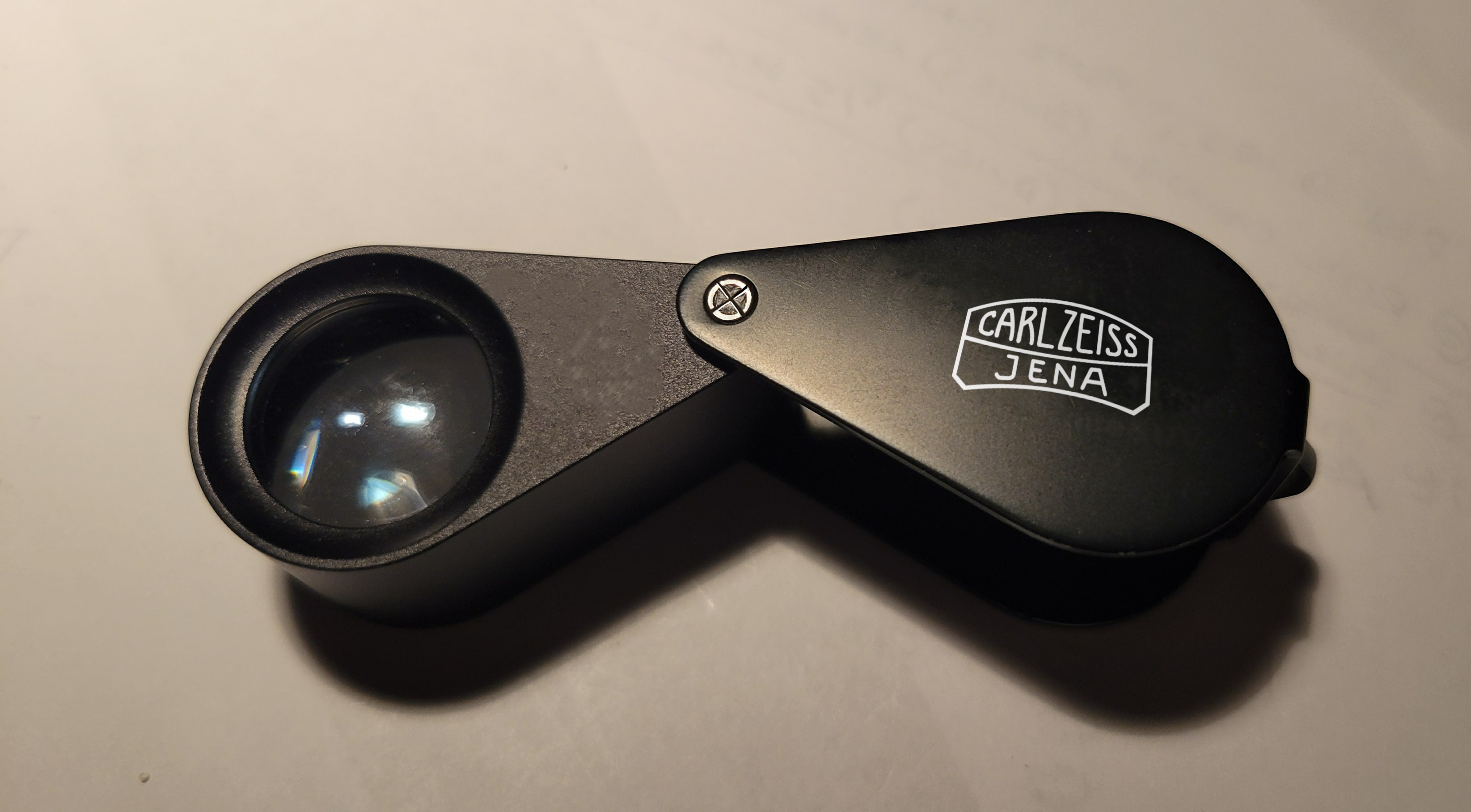
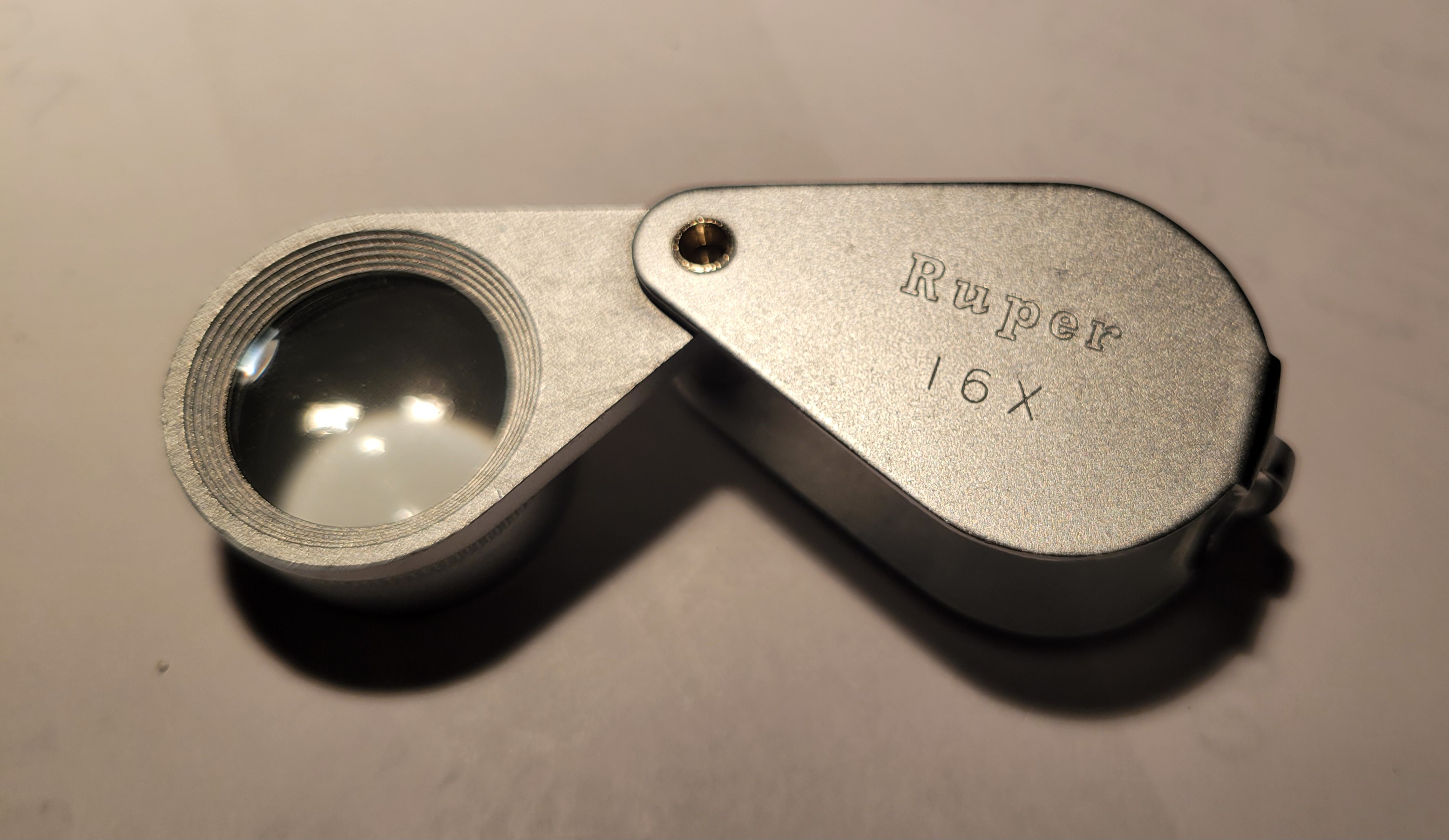
My backup is a Japanese (albeit overpowered 16x) Ruper Achromatic lens.
I purchased the Ruper loupe in the mid 90s.
The optical quality on both loupes is exceptional.
I recently added a Hastings Triple with a built-in LED light ring to my complement. Even though it claims to feature glass lenses, the quality does not compare to my trusty favourites. There is minor distortion around the outer edges.
By now you’ve realized that you might need more than one loupe.
Happy viewing!
Note: This article relates to loupes commonly used by numismatists. Since loupes are used in hundreds of applications, there are considerably more magnification choices and designs available.