
The 1973 Canadian Large Bust Quarter
The scarce obverse variety of Canada's RCMP Centennial 25-cent coin
Canada's 1973 twenty-five-cent piece is immediately recognizable. In place of the familiar caribou, the reverse shows a mounted Royal Canadian Mounted Police constable and the dual dates 1873–1973, commemorating the centennial of the force that began as the North-West Mounted Police.
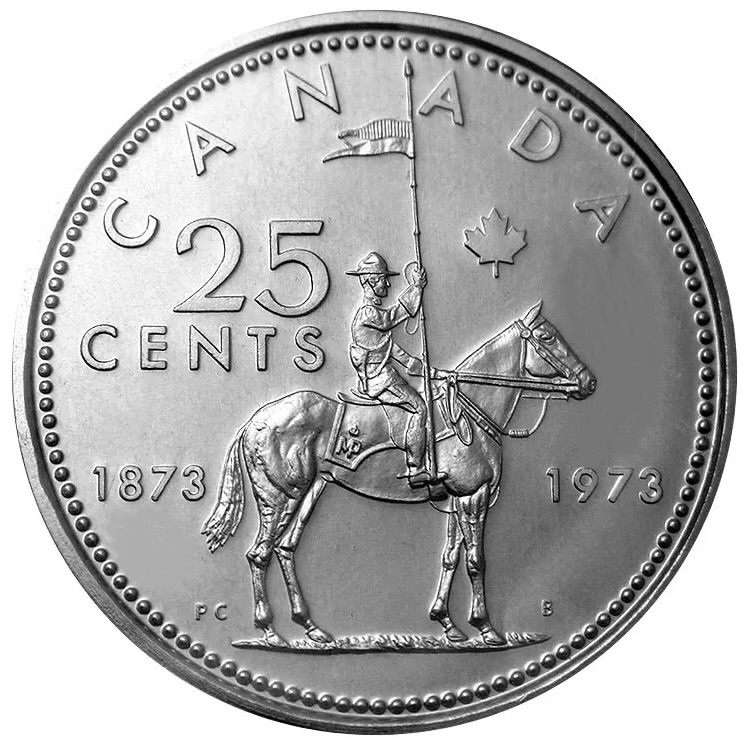
The commemorative reverse was designed by Paul Cederberg. Its mounted figure, horse, lance, denomination and anniversary dates created a much more intricate design than the standard caribou reverse used on surrounding years. For the 1973 issue, the Queen Elizabeth II obverse was consequently prepared in a reduced form that collectors now call the Small Bust. That normal 1973 obverse has 120 beads around the perimeter and represents the overwhelming majority of surviving examples.
The Royal Canadian Mint records a total 1973 quarter mintage of 135,958,589. That figure includes the normal Small Bust coins as well as the much scarcer Large Bust variety; the Mint did not publish a separate production total for the Large Bust.
Where the Large Bust Came From
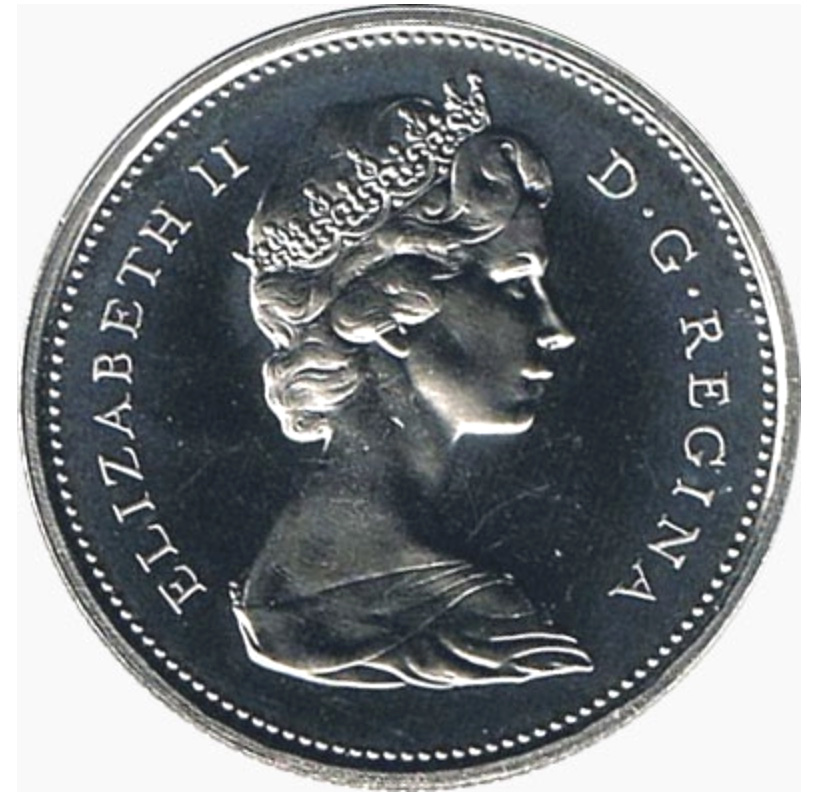
Before production was completed, a small number of 1973 quarters were struck using the older-style obverse associated with the preceding 1972 issue. This obverse carries the larger portrait of Queen Elizabeth II and a perimeter of 132 beads. When paired with the new 1973 RCMP Centennial reverse, it produced the variety collectors know today as the 1973 Large Bust quarter.
The precise number struck is not known. Independent numismatic research generally places the quantity at fewer than 10,000 pieces. Because there is no separate Royal Canadian Mint mintage figure for the variety, that number should be understood as a collector-research estimate rather than an official production total.
The difference is much greater than the name “Large Bust” might suggest. The portrait itself is larger, but the surrounding bead arrangement was also inherited from the earlier obverse. Those features make the variety identifiable without relying solely on the apparent size of the Queen's portrait.
Why Collectors Pay Attention to It
The Large Bust is one of the best-known modern Canadian quarter varieties because a very small estimated production is hidden within an otherwise extremely common commemorative issue. A collector can encounter two 1973 quarters with the same RCMP reverse, yet the obverse can identify one as the normal issue and the other as a significant Canadian rarity.
Examples are known as regular circulation strikes as well as in collector-oriented finishes. Circulated pieces can therefore still be worth examining carefully, while well-preserved examples are especially desirable because the variety becomes progressively more difficult to locate in higher grades.
Part 2 — How to Tell Them Apart
At first glance, the Large Bust and Small Bust can look very similar. Fortunately, there are several reliable obverse diagnostics. You do not need to count every bead to make the initial identification. Start with the spacing between the beads and the rim, then examine the position of the A in REGINA.
The Most Useful Diagnostics
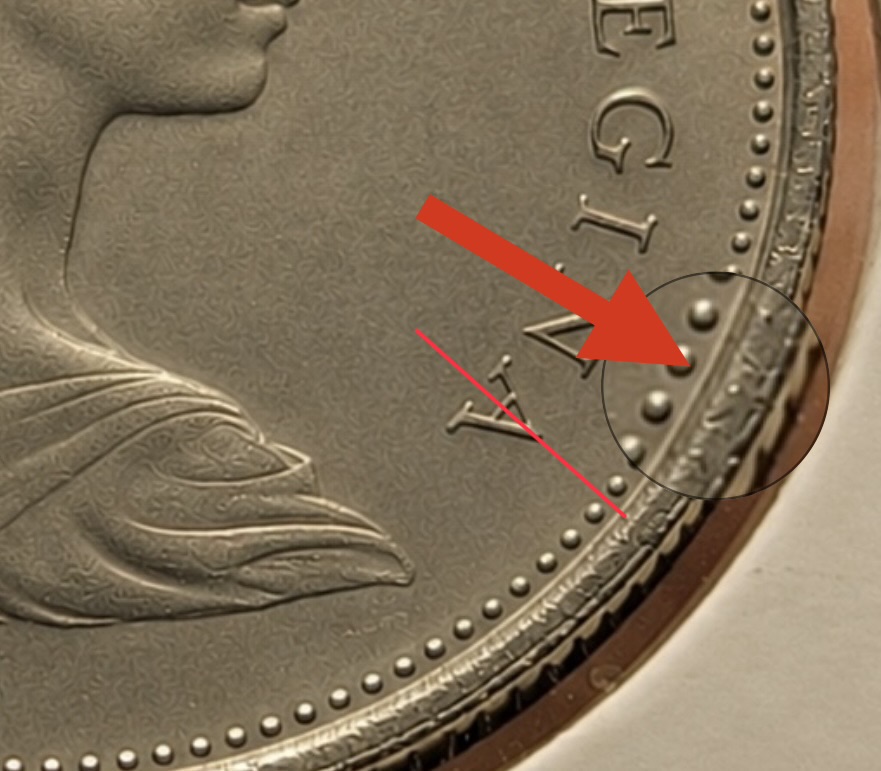
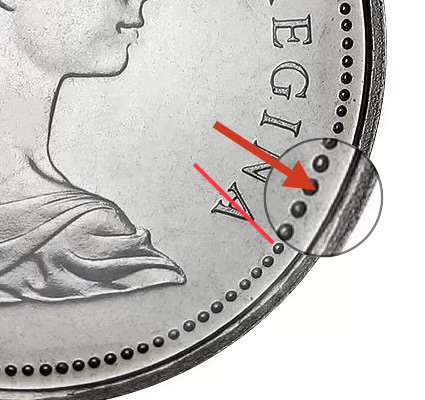
- Look at the bead-to-rim spacing first. On the RARE Large Bust, the 132 beads are positioned very close to the rim and can appear almost to touch it. On the COMMON Small Bust, the 120 beads sit farther inward, leaving a noticeably wider space between the beads and the rim.
- Check the A in REGINA. Follow the apex of the A outward toward the bead border. On the RARE Large Bust, it points directly toward a bead. On the COMMON Small Bust, it points into the space between two beads.
- Use the bead count as confirmation. The Large Bust obverse has 132 beads; the normal Small Bust has 120. Counting the entire border can be difficult, so the spacing and A alignment are generally faster identification tools.
- Use portrait detail only as supporting evidence. The Small Bust generally shows finer, more clearly defined hair detail. Wear, strike quality, lighting and photography can affect its appearance, so hair detail should not be the primary diagnostic.
For a confident attribution, use more than one feature. A coin showing the close bead-to-rim spacing together with the Large Bust alignment of the A in REGINA provides much stronger evidence than judging the apparent size of the portrait alone.