
The newer cents are not copper?
As copper commodity prices steadily increased over the years, the RCM was left with a money losing proposition. The cost to refine, mint and distribute Canadian cents became cost-prohibitive, and well above the coin's face value. Here's what happened.
The Story of Canadian cents in 1997 and again in 1999
When Canadians think of the one cent coin, affectionately called “The penny,” they often picture the familiar maple leaf design. But in 1997, the beloved penny changed forever. In 1999, the humble penny underwent yet another quiet revolution. Driven by rising commodity and production costs, the Royal Canadian Mint (RCM) began experimenting with new materials, moving away from traditional copper to a more economical copper-plated zinc core in 1997 then an even cheaper steel-based core in 1999.
From copper to zinc, steel became the standard starting in 1999
Instead of solid copper or zinc-plated copper that was introduced in 1997, a new cent would be produced using planchets that were made of 94% steel, 1.5% nickel, and 4.5% copper plating. This change was not just about cost savings—it was also about efficiency. Steel was cheaper and lighter, and the RCM developed a patented multi-layer plating process to preserve the coin’s iconic copper color and maintain its main technical characteristics.
Magnetic Variances
One of the most intriguing outcomes of this transition was the magnetic property of the new coins. Traditional copper coins were non-magnetic. Copper-plated zinc coins are also non-magnetic. Steel-cored cents however, could be attracted to magnets, creating a clear distinction between older and newer issues. Collectors quickly noticed that some coins had magnetic responses while others did not, depending on the exact composition and plating thickness.
Mint Marks and Variations
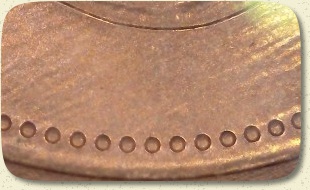
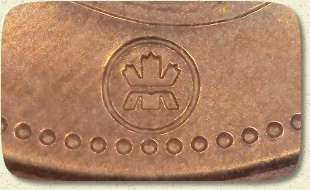
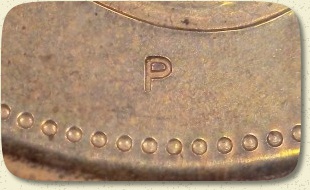
While the coins appeared almost identical, their chemical composition and magnetic properties, resulted in possible confusion during the production and sorting process. To help identify these new coins, the RCM introduced special mint marks: Starting with test mintages in 1999, the “P” Mint Mark (the “P” stood for “plated,”) was introduced for production runs from 2000 onwards. This signaled the gradual reduction in copper-plated zinc and the increased use of the new copper-plated steel technology. Later, from 2006 onwards, the RCM replaced the “P” with its own stylized RCM logo, further distinguishing the steel cents.
As the planchet transition and mint marks was underway, some older blanks were still in the production queue. Inevitably these planchets were misdirected during production, leading to a fascinating array of variations: Coins minted on existing copper-plated zinc planchets should bear no mark at all. Steel-core cents would carry the “P”, while latter production run coins would display the RCM logo. That was the plan, but like all well laid plans, they can easily go awry. The reality is copper-plated zinc planchets were accidentally minted with “P” marks, while steel planchets were minted without any distinguishing mint marks. This production error was not uncovered and millions of odd variations for the same year made it into circulation.
For collectors, this meant that pennies from the early 2000s could be sorted into multiple categories, each with its own story. While the coins appeared almost identical, their chemical composition resulted in possible confusion during the production and sorting process. For the 2006 production year, there are SIX variations of the same coin:
- Zinc core with no mint mark - Non magnetic
- Zinc core with P mint mark - Non magnetic (extremely scarce)
- Steel core with no mint mark - Magnetic (scarce)
- Steel core with P mint mark - Magnetic
- Zinc core with RCM logo - Non magnetic
- Steel core with RCM Logo - Magnetic (desirable)
For the 2007 through to the final year of production in 2012, both magnetic and non-magnetic varieties exist.
Mint Mark Reference
Why It Matters
Magnetic tests are a quick way to distinguish the steel copper-plated cents from copper-plated zinc ones. Checking for mint marks (“P” or RCM logo) also helps identify the era of production, but based on the production errors, the “mint mark” method DOES NOT confirm their chemical compositions.
The variations in plating and magnetism particularly for the 2006 year, make these pennies especially appealing for hobbyists who enjoy the thrill of discovery.
How to Identify Variations
Aside from the mint marks, use the magnet test. It's a simple way to distinguish steel cents from non-magnetic copper-plated zinc ones.
The transition wasn’t just a technical footnote—it marked the beginning of the end for the Canadian penny. By 2012, production costs had risen so high that the government discontinued the coin altogether. But the years between 1999 and 2012 remain a golden era for collectors, full of subtle differences and hidden treasures.
Now you know.