
Canadian Coin Errors: Mint Error or Damage?
Almost every collector eventually finds a coin that looks wrong. A date seems doubled. Part of the rim is missing. The design is shifted. Metal appears to be peeling away. A circular groove crosses the surface. The natural temptation is to ask, “What kind of mint error is this?”
There is a better first question: could this feature actually have been created while the coin was being made?
That distinction matters. Genuine mint errors can be fascinating and sometimes valuable, but circulation damage, machinery, heat, chemicals, impacts and deliberate alteration can create equally dramatic effects. An unusual-looking coin is evidence that something happened to it; it is not, by itself, evidence that the Mint caused it.
Start with the manufacturing process, not the appearance.
If the proposed explanation is incompatible with the way the coin was blanked, plated, struck or ejected, another explanation is needed.
Error, Variety or Damage?
The terms are often used interchangeably in casual conversation, but they describe different things. A doubled die, for example, is fundamentally different from a coin that moved and received another strike. Both may show duplicated detail, yet the mechanism—and therefore the diagnostics—is different.
Think Like the Coining Press
A simplified production path helps explain most errors:
An error must fit somewhere in that sequence. A clip originates before striking. A cud originates in a broken die. An off-centre strike occurs when the planchet is not correctly positioned for the strike. A gouge acquired years later in circulation does not become a mint error merely because its shape happens to resemble a letter or numeral.
Planchet Errors: The Problem Begins Before the Strike
The planchet is the prepared piece of metal that receives the design. Problems can include clipped planchets, laminations, cracks or splits, incorrect thickness or composition, deficient plating and, much more rarely, a planchet intended for another denomination or issue.
A genuine curved clip begins during blanking when a punch overlaps a previously punched opening or the edge of the metal strip. The missing portion therefore existed before the coin was struck. Metal flow and the behaviour of the rim near the missing area can help distinguish a genuine clip from a piece simply cut from a finished coin.
Wrong-planchet errors are another case where measurements matter. Diameter, thickness, weight and composition can be more persuasive than appearance. A smaller planchet may also be unable to receive the complete peripheral design.
Plating failure can be genuine
Canadian plated coinage introduces another category of legitimate manufacturing defect. A plating layer can be incomplete, poorly bonded or otherwise defective. That should not be confused with plating that has been scraped, chemically stripped or removed after the coin entered circulation.
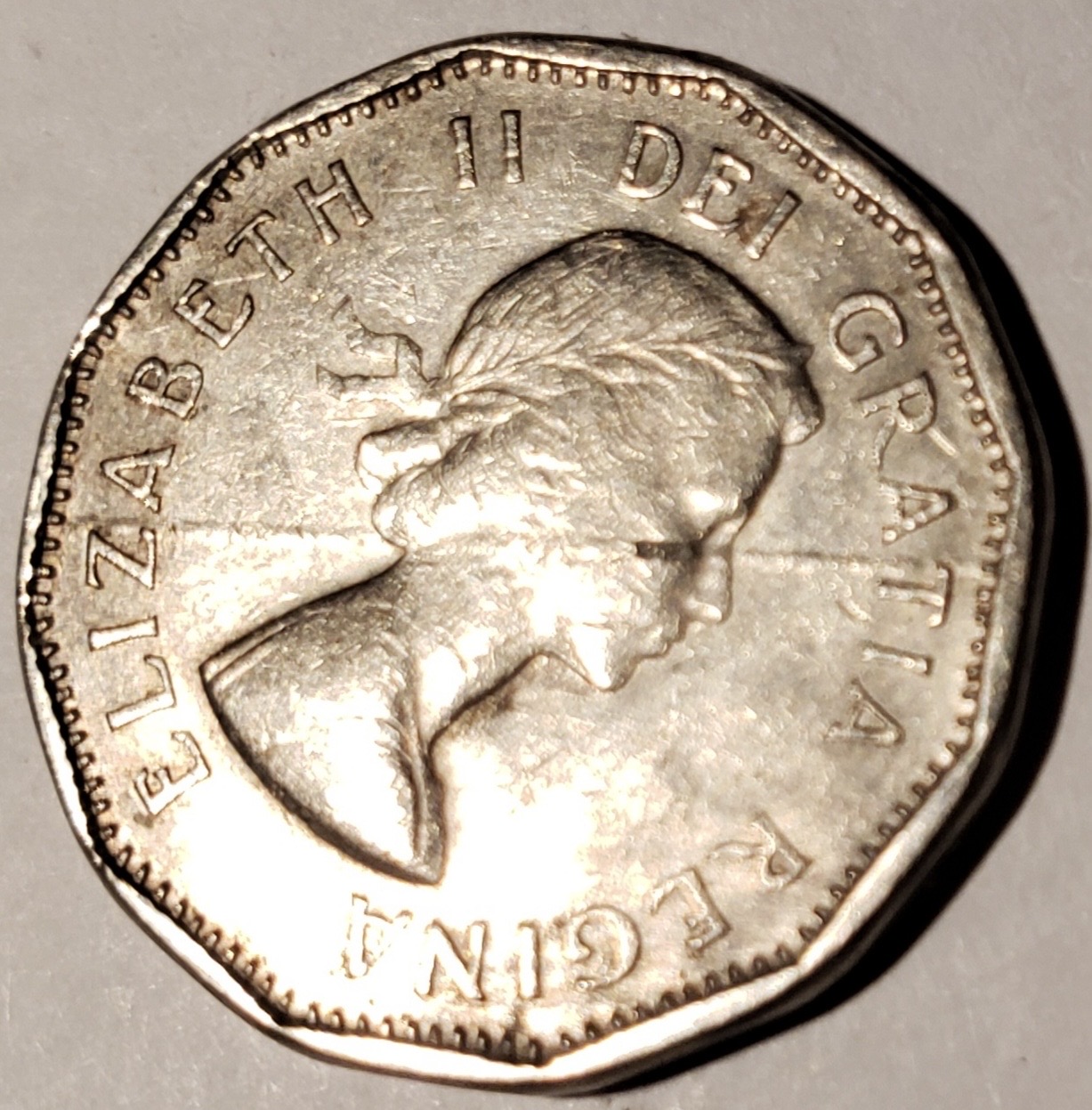
The important lesson is not that every peeling surface is an error. It is that the collector must determine whether the failure is consistent with the planchet's manufacture or with later damage. Never scrape a suspicious area to “see what is underneath.” That destroys evidence and can turn a genuine error into a damaged coin.
Die Errors: When the Tool Leaves the Evidence
The dies contain the negative design used to strike the coin. When a die cracks, chips, clashes or deteriorates, the resulting evidence can be transferred repeatedly to coins struck by that die.
A useful diagnostic principle is that a recess or void in the die generally allows planchet metal to flow into it during striking. The resulting feature on the coin is therefore raised. A die crack commonly appears as a raised line. When a substantial portion of a die breaks away at the rim, the planchet can flow into the missing area and create a raised, unstruck mass known as a cud.
That is very different from a scratch cut into a finished coin. A scratch removes or displaces metal and is normally incuse. This raised-versus-incuse test is not an absolute answer to every attribution, but it is an excellent starting point.
Other die-related phenomena include clashes, where dies contact one another without a planchet properly between them, and die deterioration, where prolonged use changes the sharpness and character of the design. Some repeatable die characteristics are collected as varieties rather than treated as individual mint errors.
Striking Errors: When the Coin Is in the Wrong Place
Striking errors occur when something goes wrong as the dies, planchet and collar come together. They include off-centre strikes, broadstrikes, multiple strikes, partial-collar errors, brockages and strike-throughs.
An off-centre strike occurs when the planchet is not correctly centred between the dies. Part of the design is consequently missing and an unstruck portion of the planchet remains visible. A broadstrike, by contrast, occurs when the collar fails to constrain the coin during striking; the planchet spreads beyond its intended diameter while the complete design may remain present.
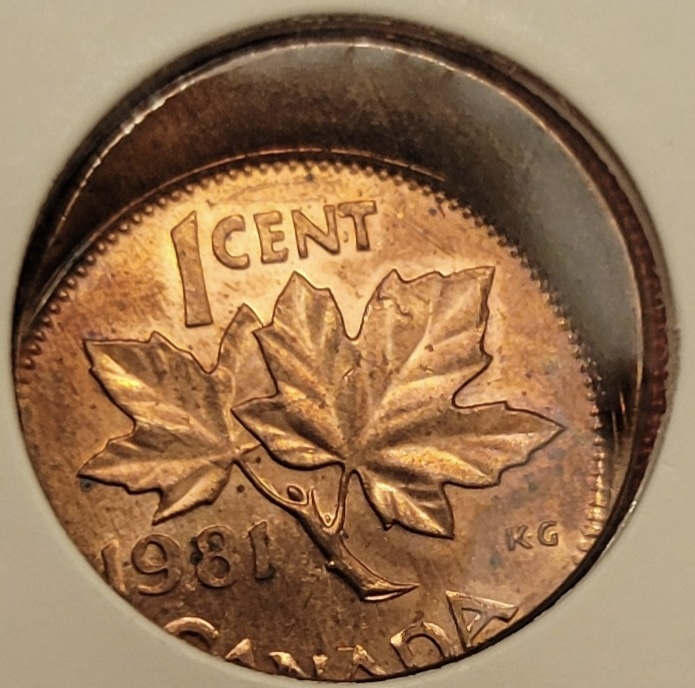
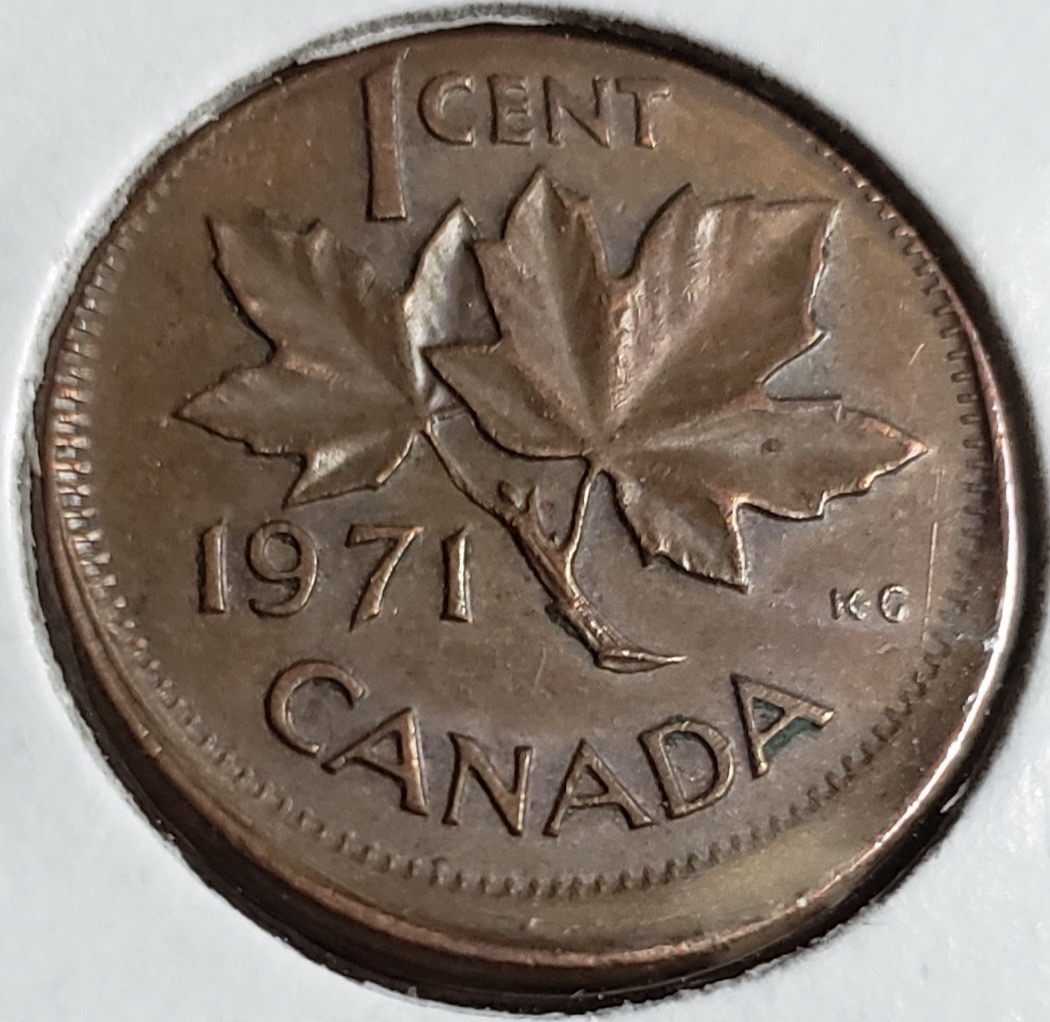
The degree of displacement matters. A coin that merely has one die slightly out of alignment is not necessarily the same thing as a planchet that was struck off centre. Looking at both sides is important: a misaligned die can affect one face while the opposite face remains properly centred.
Multiple strikes and brockages
If a struck coin fails to eject and is struck again, the second strike can produce duplicated and displaced design. If a previously struck coin adheres to a die and then strikes another planchet, it can act like a temporary die and create a brockage—an incuse, mirror-image impression of the design.
Strike-throughs
Foreign material between a die and planchet can prevent part of the die from reaching the coin. Depending on the material, a strike-through may leave an irregular depression, missing detail or an impression of the interfering object. Grease and debris can also produce weak or absent design elements. Again, the mechanism has to make sense: the feature was created during the strike, not carved into the coin afterward.
Post-Mint Damage: The Great Imitator
Post-mint damage is responsible for a remarkable number of “error coins.” Coins are dropped, crushed, dragged, rolled, bent, heated, corroded, polished, squeezed, drilled and fed through machinery. They can spend decades in environments the Mint never anticipated.
Common examples include impact marks, gouges, scratches, flattened lettering, damaged rims, vise jobs, spooned or hammered edges, dryer coins, corrosion, plating loss, road damage and deliberate alteration. Heat and chemical treatment can also change colour and surface texture; those subjects are covered in greater detail in CoinData's Artificial Toning & Surface Manipulation article.
A particularly useful clue is displaced metal. When a hard object strikes a finished coin, metal often moves. A gouge may have raised lips. A flattened letter may spread outward. An edge impact may push metal toward an adjacent area. These are mechanical consequences, not mysterious new design elements.
“It looks too strange to be damage” is not a diagnostic.
Circulation machinery and deliberate human alteration can create effects far more dramatic than many genuine mint errors.
The “Ring of Death” — Rolling and Counting Machine Damage
One of the most deceptive forms of post-mint damage is the circular scrape or groove commonly called the ring of death. It can be produced when a coin is caught or contacted by components of coin-counting, wrapping or rolling machinery. Because the contact occurs at a fixed radius, the resulting damage often traces part or all of a circle across the coin.
The ring is frequently obvious, but not every machine-damaged coin displays a complete, neat circle. Partial contact can affect only a section of the surface. That becomes particularly troublesome when the path crosses the date or lettering.
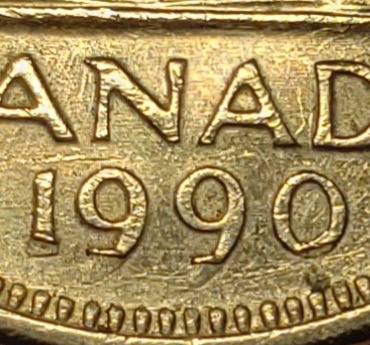
This is why an apparently doubled, hooked or malformed numeral should never be judged in isolation. Follow the suspected damage beyond the date. Look for a continuation of the same arc, abrasion, pressure or displaced metal elsewhere at the same radius. If the anomaly is simply one point along a larger mechanical path, post-mint damage is usually the more coherent explanation.
The lesson is broader than this single example: follow the damage, not the shape it happens to create. A machine does not know that it is crossing the date. The resulting mark can accidentally mimic a repunched digit, overdate, extra serif or other desirable feature.
Doubled Die, Multiple Strike or Mechanical Damage?
“Doubling” is one of the most overused descriptions in coin collecting. Several completely different mechanisms can produce something that looks doubled.
A genuine doubled-die variety originates in the die itself and therefore produces repeatable characteristics on coins struck from that die. A multiple strike occurs because the coin receives more than one strike. Machine or strike-related doubling can create shelf-like secondary detail without representing a doubled die. Post-mint impact can flatten and push metal beside a numeral or letter, creating yet another false impression of doubling.
The key is to examine the shape of the secondary feature, its relationship to the primary design and whether the same diagnostic appears on other known examples. One enlarged digit is not enough.
Both Sides—and the Edge—Matter
A single close-up can hide more than it reveals. Whenever possible, examine the complete obverse, reverse and edge. Measure the coin if the alleged error involves the planchet or strike.
- Weight: Can support or contradict a wrong-planchet or missing-material theory.
- Diameter and thickness: Useful when the planchet or collar is in question.
- Magnetism: Useful for some Canadian compositions, but not a universal test.
- Alignment: Compare both faces when investigating off-centre or misaligned-die claims.
- Edge: May preserve evidence of collar behaviour, impact, filing or other post-mint alteration.
For significant or valuable alleged errors, precise measurements and comparison with established examples are far more persuasive than a seller's description.
Magnification Helps—Until It Doesn't
Modern digital microscopes can make a tiny plating bubble, scratch or die chip look spectacular. Magnification reveals evidence, but it does not determine importance. A feature that fills a computer monitor may be almost invisible to the naked eye.
Begin at low magnification so the feature remains in context, then increase magnification to inspect metal flow, edges and texture. CoinData's Loupe or Microscope and It's Not Just About Power articles discuss this problem in more detail.
Do Not Destroy the Evidence
If you suspect an error, resist the urge to test it destructively. Do not scrape exposed metal, peel loose plating, file an edge, polish a suspected strike-through, bend a lamination or apply chemicals to see how the surface reacts.
Start with photography, weight, dimensions, magnetism where relevant, comparison with normal examples and careful examination under appropriate magnification. A genuine error can be permanently compromised by an attempt to prove that it is genuine.
Does an Error Automatically Mean Value?
No. “Unusual,” “mint error,” “rare” and “valuable” are not synonyms.
Value depends on the type and severity of the error, how obvious it is, the underlying coin, condition, rarity, collector demand and confidence in the attribution. A spectacular, easily understood error may attract substantial interest. A tiny die chip or common plating imperfection may add little or nothing. Some manufacturing irregularities are so minor that professional grading services regard them as normal mint tolerance rather than major collectible errors.
Likewise, post-mint damage usually reduces value even when the result is visually fascinating. The 1990 example above is useful precisely because the altered date can look more interesting than an ordinary date—but the mechanism is damage, not a new variety.
Before Buying an Expensive “Error”
Extraordinary claims require evidence. Before paying a significant premium, ask whether the proposed error is mechanically possible, whether both sides support the attribution, whether weight and dimensions are correct, whether comparable authenticated examples exist and whether professional authentication is appropriate.
Online photographs can be especially misleading. Lighting, viewing angle and extreme magnification can hide displaced metal, surface disturbance or the continuation of a scratch. A seller's attribution should be treated as a claim to evaluate, not as proof.
The more valuable the claimed error, the more scrutiny it deserves.
A purchase decision should rest on the evidence present on the coin, not simply on an unusual appearance or an appealing description.
A Practical Checklist
When you encounter a strange Canadian coin, work through the questions in order:
- What exactly is unusual—raised metal, missing metal, displacement, colour, weak design or duplicated detail?
- At what stage of manufacture could that feature have been created?
- Is the feature raised or incuse, and is surrounding metal displaced?
- Does the evidence continue beyond the area that first caught your attention?
- What does the opposite side show?
- Does the edge provide additional evidence?
- Are weight, diameter, thickness and composition consistent with the proposed explanation?
- Does the same diagnostic appear on authenticated examples?
- Could ordinary machinery, impact, corrosion, heat or chemical exposure explain it more simply?
The goal is not to prove that every unusual coin is damaged. Genuine mint errors exist, and some are among the most interesting products of the coining process. The goal is to understand how the feature was created before giving it a name.
Once you begin thinking in terms of planchets, dies, collars, strikes and metal flow, many mysteries become much easier to solve—and the genuine errors become considerably more interesting.