
Die Cracks, Chips, Breaks and Cuds
Learn how die cracks, die chips, retained breaks, major die breaks and cuds form, how they appear on coins, and how progressive die states can be distinguished from damage.
Why a Die Crack Appears Raised
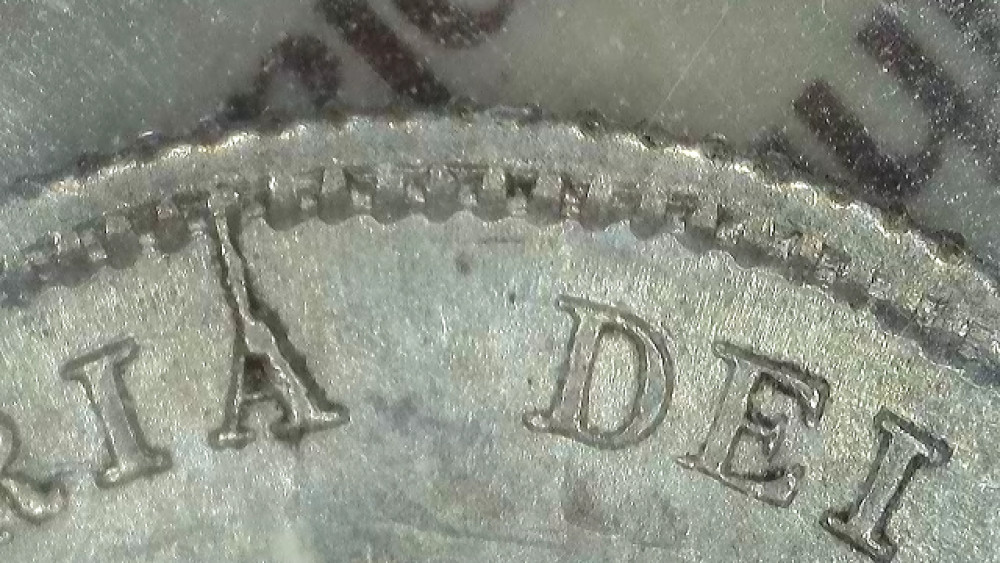
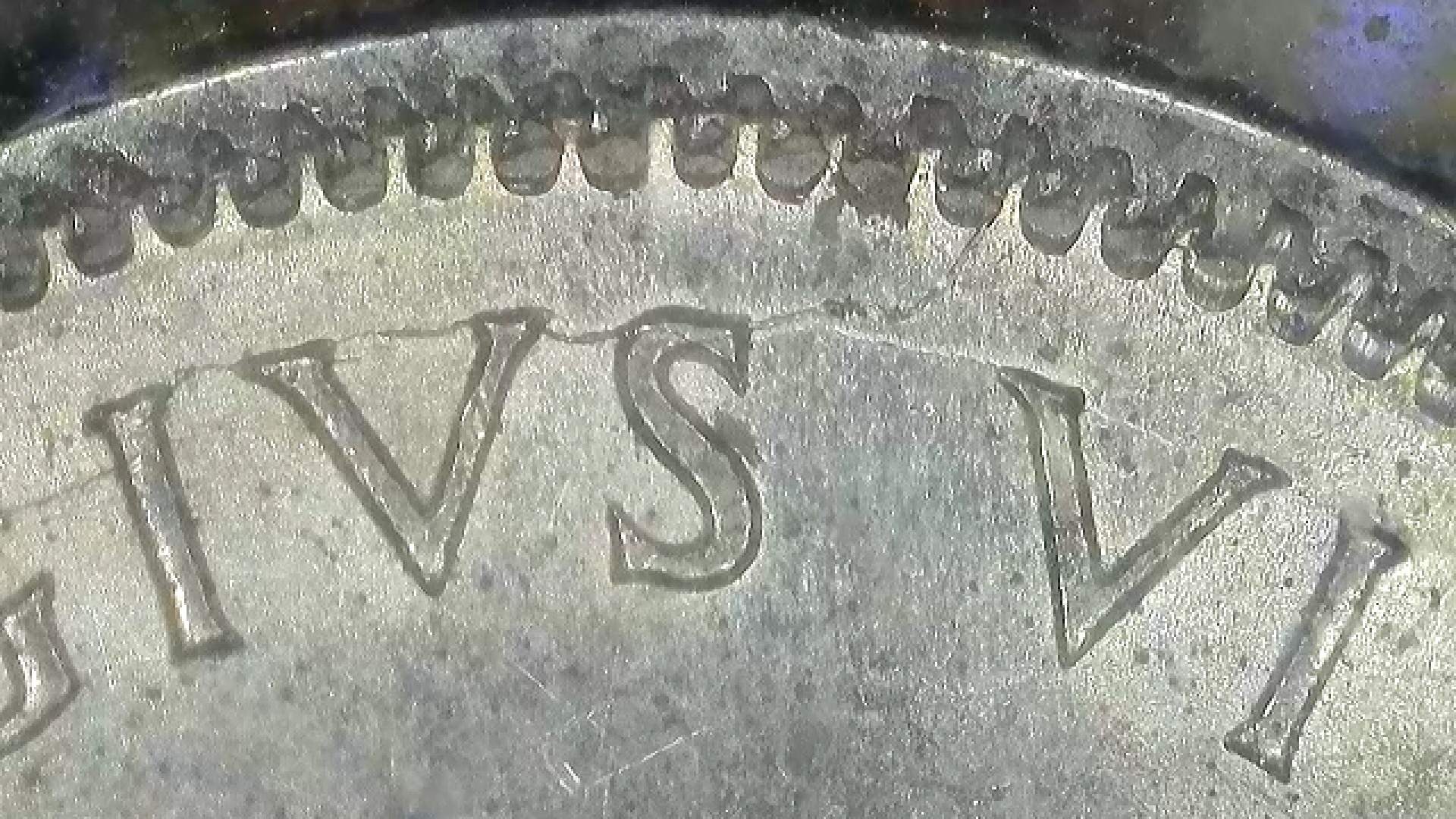
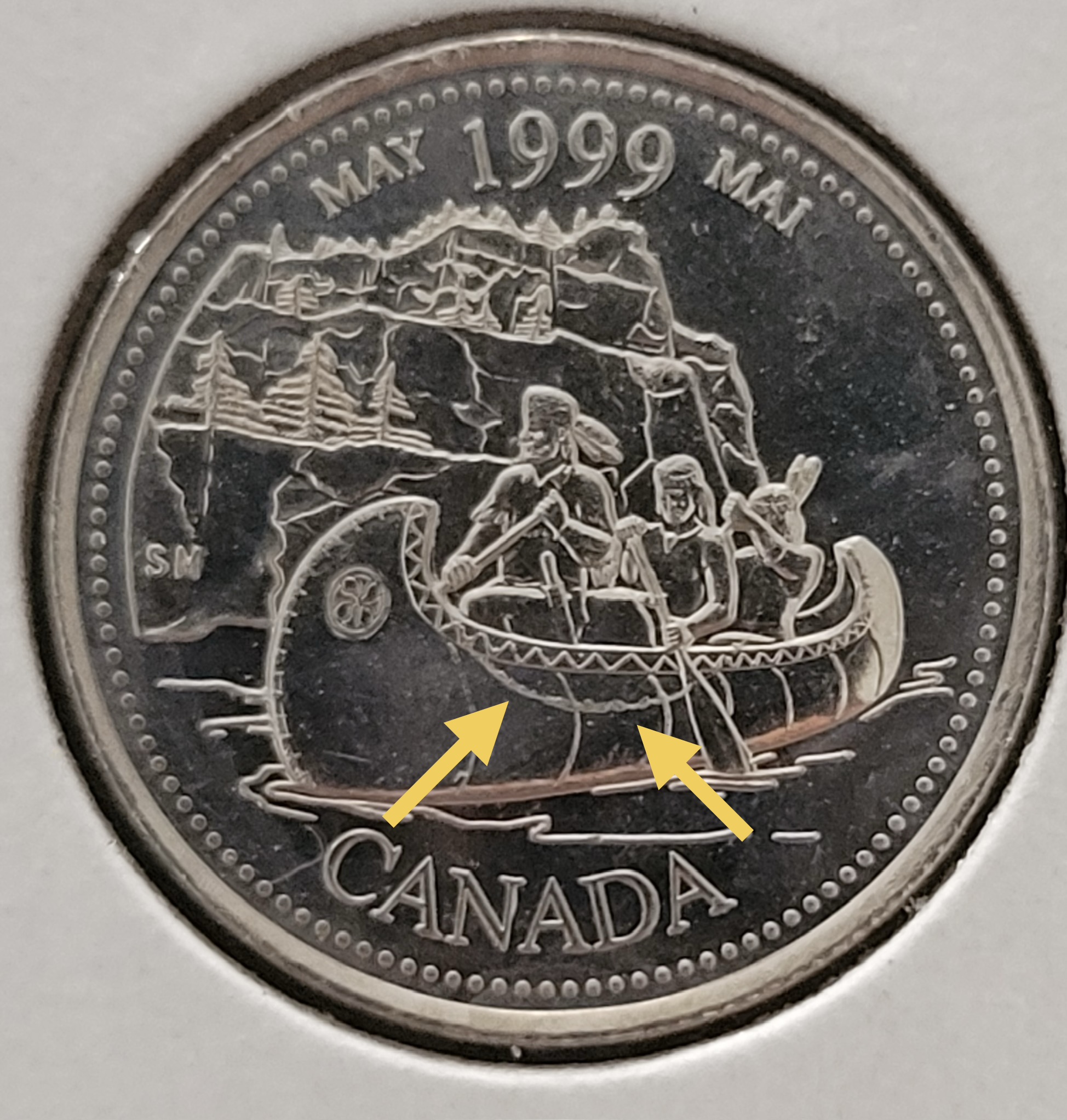
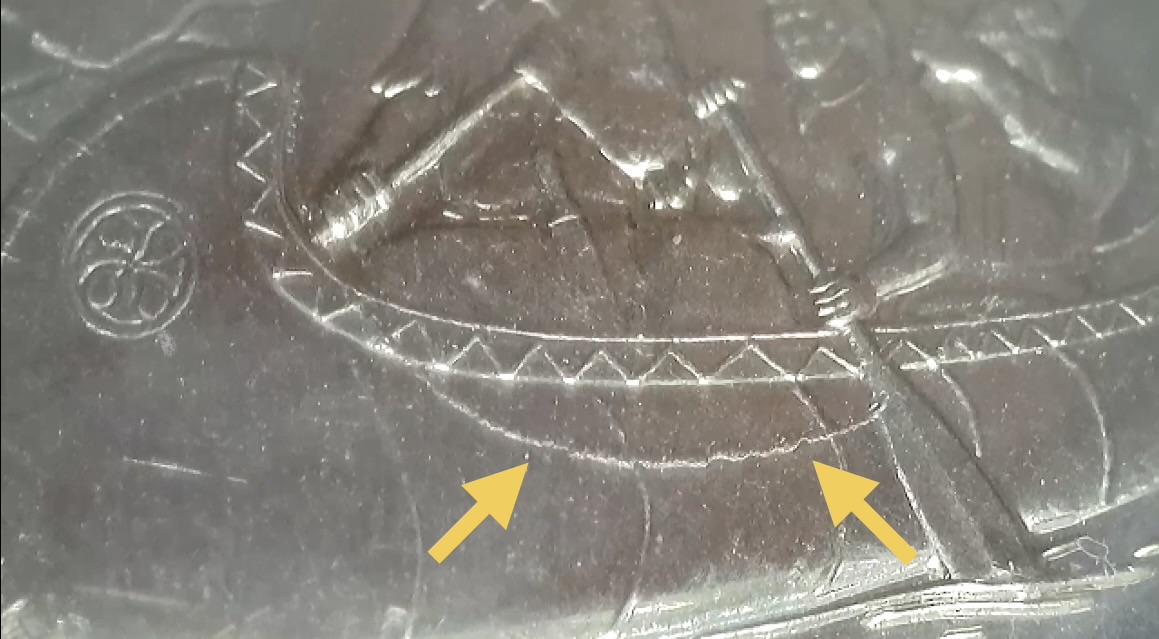
A crack is a separation in the die face. During striking, planchet metal is forced into that narrow opening. The coin therefore receives a raised line corresponding to the crack. This is the opposite of an ordinary scratch cut into the coin after striking, which is incuse and usually pushes metal to one or both sides.
Die Chips
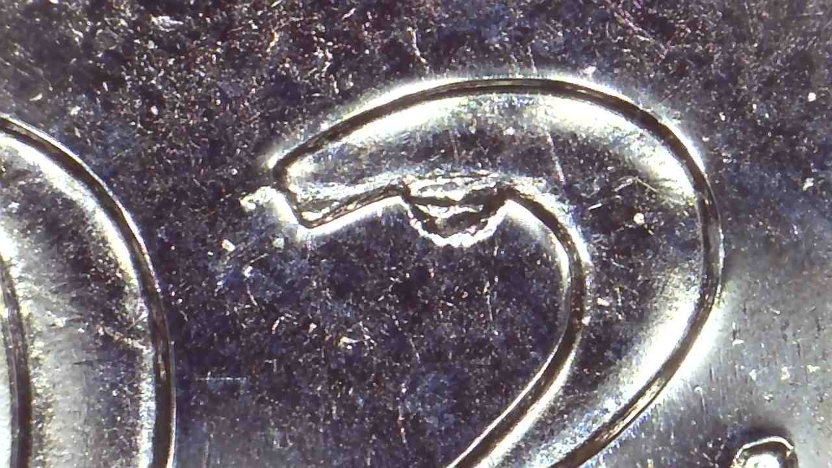
When a small fragment breaks away from the die face, planchet metal can fill the resulting void and leave a localized raised area on the coin. Chips are often found beside or within letters, numerals and other sharply bounded design elements, though they can occur elsewhere. Because natural die fractures form a size continuum, the boundary between a large die chip and an interior die break is partly conventional rather than absolute.
Interior Die Breaks
A larger natural break can occur wholly within the die face without reaching the die's rim gutter. The struck coin then carries a broader raised area, often termed an interior die break. In specialist usage, a cud is specifically a corner or peripheral die break that includes the rim gutter and at least some adjacent field; an interior die break is therefore not a cud merely because it is large.
Retained and Displaced Die Breaks
A cracked portion of the die can deform or become displaced while still partly attached. In other cases, a fragment can break free yet remain held in position; specialists then use terms such as retained cud or retained die break, depending on location. Convincing diagnosis requires evidence of displacement—such as a step in level, lateral offset or spread—not merely a crack surrounding an otherwise normal island of design.
Cuds
A cud is produced by a die break at the corner or periphery of the die that removes the rim gutter and at least a portion of the adjacent field. Planchet metal flows into the resulting void, producing a raised mass connected to the coin's rim; detail opposite a major cud can also be weak because local striking pressure is reduced. An isolated raised area in the middle of a coin is an interior die break or chip, not a cud, regardless of size.
Progression and Die-State Pairs
Multiple coins can sometimes document a die failure through successive stages—for example, an initial crack followed by widening or displacement and eventually a cud. Such a sequence is highly persuasive evidence of common die origin and can establish chronology. It should not be treated as a mandatory pathway: some die breaks occur abruptly, and not every crack progresses to a retained break or cud.
Cud or Edge Damage?
Heavy edge impacts can fold or push metal inward, and severe damage can create a raised-looking mass. Examine the rim, design and metal flow. A genuine cud replaces missing die detail because the die cavity was absent; impact damage disturbs an already struck design. Under magnification, displaced letters, flattened rims, sheared metal and impact direction often reveal the difference.
This educational series draws upon technical publications from the Royal Canadian Mint and U.S. Mint, supplemented by various numismatic references, published research and publicly available resources. Terminology and classification methods may differ among sources. CoinData evaluates these distinctions using observable physical evidence and established minting principles. Photographs illustrate actual coin characteristics; precise die attribution remains provisional unless independently verified.