
Die States, Deterioration and Mortar Set
Explore Canadian coin die states, die deterioration doubling, flow lines, erosion, polishing, orange-peel texture and Mortar Set caused by extreme die fatigue.
A Die Has a Working Life
A working die is not static. Repeated impact and metal flow subject its face and subsurface to wear and stress. Early impressions may be sharp and crisp; later coins can show polish lines, loss of fine detail, radial flow-line wear, erosion around devices, roughened fields, cracks and localized breaks. Specialists use die states or die stages to document this progression, although the terminology and number of stages vary by cataloguing system.
Die Deterioration Doubling
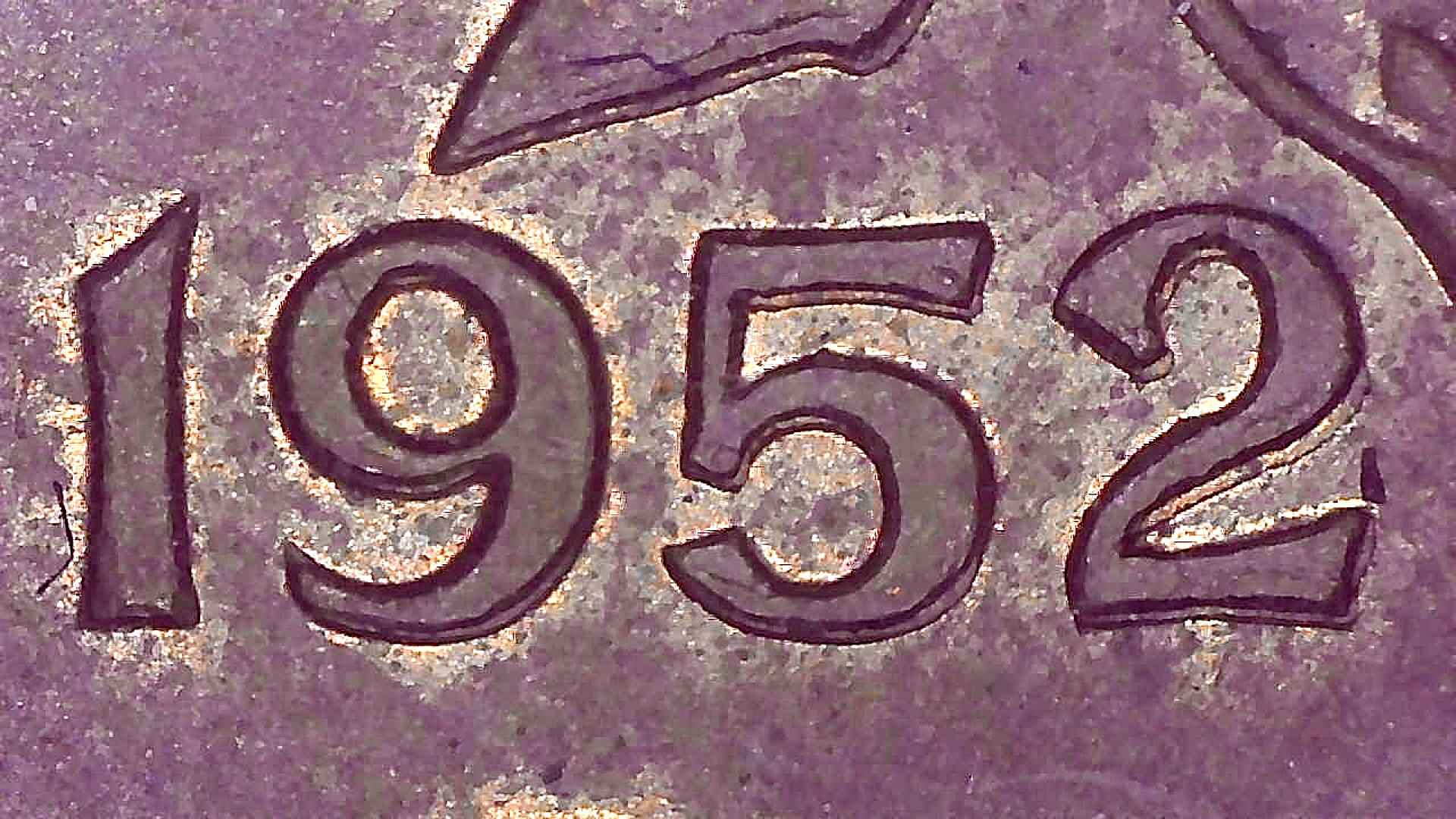
As a die deteriorates, the margins of recessed letters and numerals can lose their original crisp geometry. On the struck coin, affected devices may look thickened, smeared or doubled, often with rough, rounded and variably wide contours. This is die-deterioration doubling: a late-die-state effect, not hub doubling created during die manufacture. It can repeat on successive coins because the deteriorated geometry resides in the working die.
Flow Lines and Erosion
Repeated striking produces metal flow across the die face and progressive wear. Radial flow lines may develop or strengthen in the die fields, often becoming most evident toward the periphery, while fine design can lose sharpness and fields may become textured. These changes can help sequence coins from the same die, but normal progression is a die-state marker rather than automatically a new variety.
Mortar Set
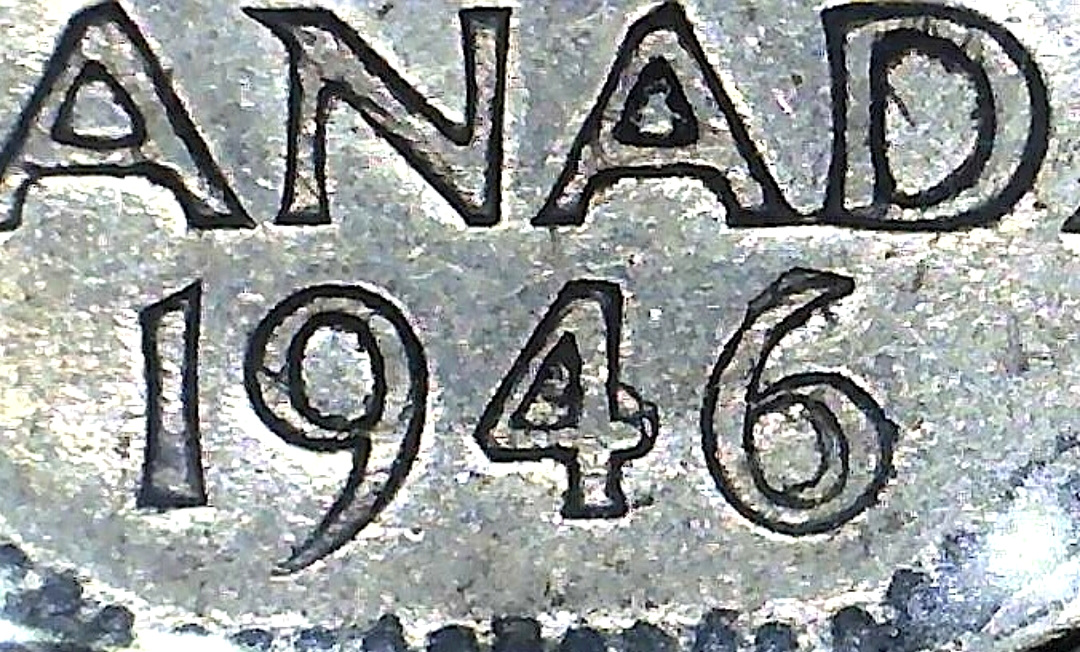
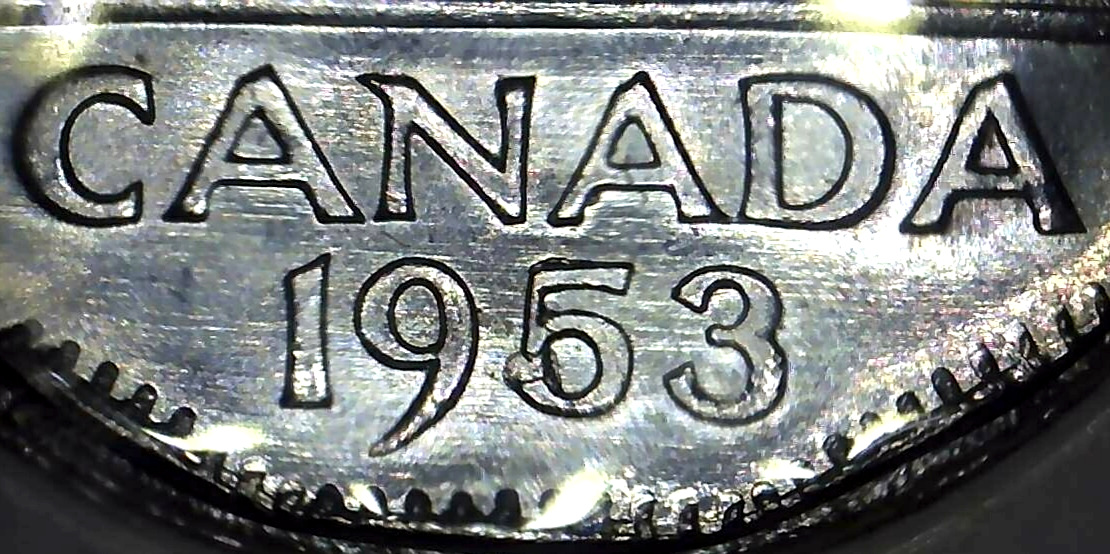
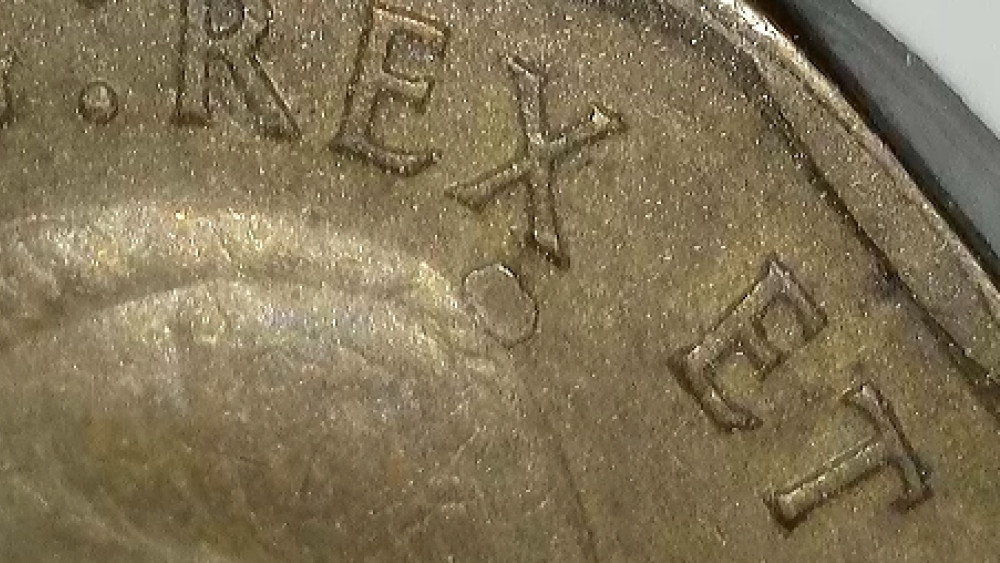
“Mortar Set” is a distinctly Canadian collector term popularized by Hans Zoell for a rough, mortar-like build-up of raised metal around letters, numerals or other devices on the struck coin. Modern Canadian references place it within severe die deterioration or die-deterioration doubling. Canadian Coin News describes the effect as die metal breaking away at the boundary between recessed devices and the field, allowing planchet metal to flow into the resulting cavities. Historical Canadian references also associate many mid-20th-century examples with deterioration or flaking of chromium plating applied to working dies. For that reason, Mortar Set is best treated as a descriptive Canadian die-deterioration phenomenon rather than as one universally proven microscopic failure mechanism for every example.
Why Mortar Set Can Look Like Doubling
The deteriorated boundaries around lettering can create secondary ridges and thickened outlines that resemble doubling. Mortar Set can itself repeat on coins from the same deteriorating die, so repeatability is not the deciding test. Instead, examine morphology: hub doubling normally preserves recognizable duplicated design with rounded relief, notching or valleys where present, while Mortar Set is characteristically rough, irregular and concentrated along deteriorating device-field boundaries. Its extent can change as die deterioration progresses.
The Orange-Peel Stage
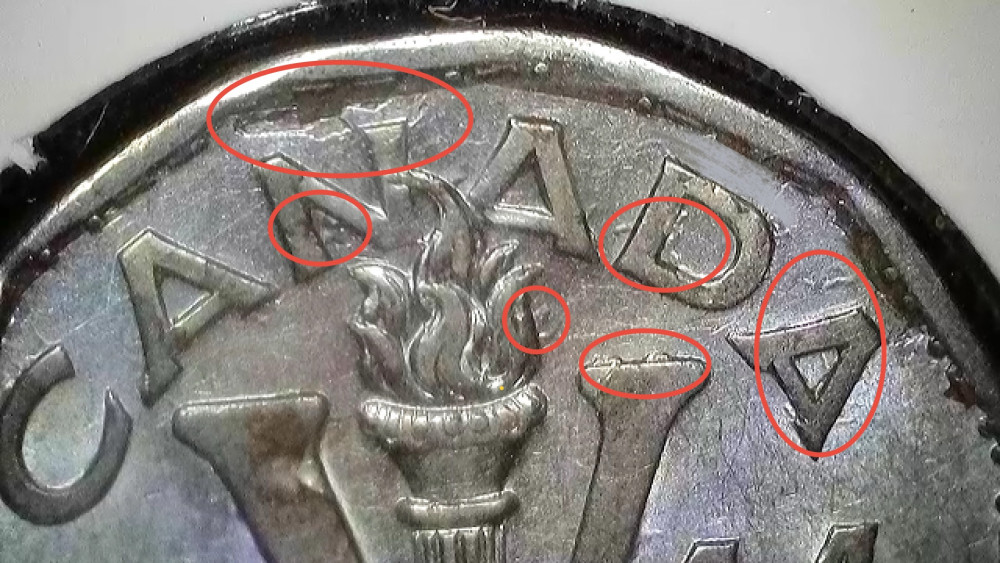
Canadian references report that advanced die deterioration can extend from device margins into the fields and produce a granular or orange-peel-like texture. When such texture occurs with roughened device boundaries, thickened detail and other late-die-state evidence, it supports a broad die-deterioration diagnosis rather than an isolated die chip. Orange-peel texture is descriptive evidence, not by itself proof of Mortar Set.
Mortar Set Versus Die Chips
A die chip is a small localized void created when die material breaks away; the resulting coin normally shows a discrete raised area. Mortar Set describes broader, irregular deterioration concentrated around device boundaries and, in advanced cases, adjoining fields. The same die can develop both localized chips and wider deterioration. The diagnostic objective is therefore to separate a discrete break from progressive surface or boundary deterioration, while recognizing that the two can coexist.
This educational series draws upon technical publications from the Royal Canadian Mint and U.S. Mint, supplemented by various numismatic references, published research and publicly available resources. Terminology and classification methods may differ among sources. CoinData evaluates these distinctions using observable physical evidence and established minting principles. Photographs illustrate actual coin characteristics; precise die attribution remains provisional unless independently verified.