
Die Varieties: When the Difference Is in the Tool
Understand Canadian coin die varieties, including doubled dies, repunched dates and mint marks, re-engraving, modified dies and the repeatability that separates varieties from one-off errors.
The Test of Repeatability
Repeatability is one of the strongest tests for die origin. A die transfers the same unusual geometry again and again until it is altered, deteriorates, breaks or is withdrawn. If a doubled serif, repunched numeral or engraved correction appears in precisely the same position on multiple coins, those coins can be linked to a common die. But cracks, chips and other die-state markers can also repeat, so a feature must also be identified by its morphology and origin before it is called a die variety.
Doubled Dies
A doubled die contains duplicated or displaced design information in the die itself. Historically this often arose when a working die received more than one hub impression that was not perfectly registered; modern die-making methods can produce other recognized forms of hub doubling as well. Classic hub doubling shows raised, rounded secondary design with notching, split serifs or valleys where applicable. This differs from common machine-doubling damage, which is typically flat and shelf-like because struck metal has been sheared or displaced rather than duplicated in the die.
Repunched Dates, Mint Marks and Individual Elements
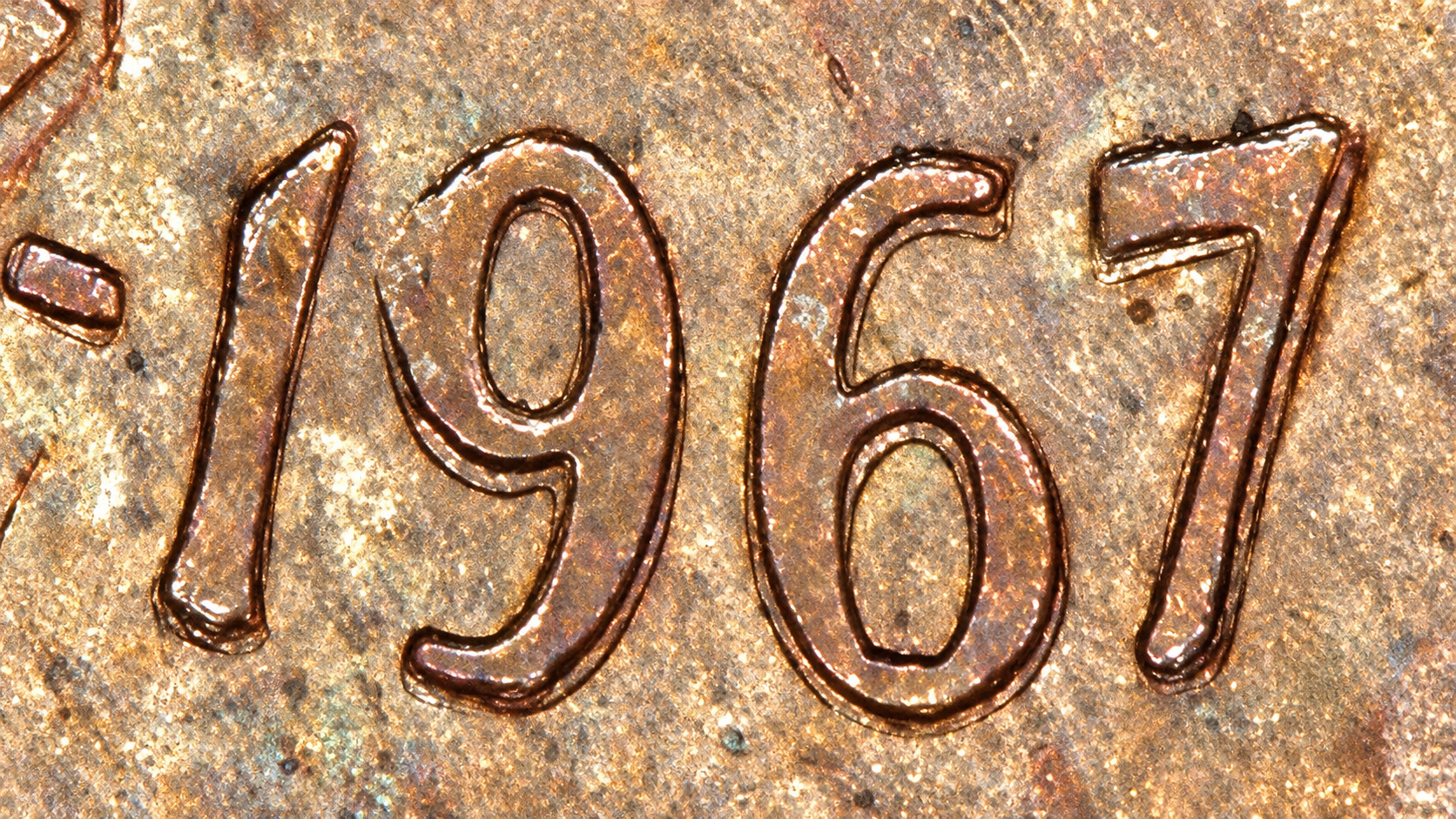
On many older dies, dates, mint marks or other individual elements were punched or strengthened separately. A punch applied more than once in slightly different positions can leave a residual secondary curve, serif or stroke. Because the repunching occurred on the die, the same relationship repeats on coins struck before later die wear or polishing obscures it. The exact historical die-making method must be established for the issue being attributed; not every doubled element is a repunched element. Because individual numerals and other design elements on many older Canadian coin dies were punched or retouched by hand, repunching can appear in different locations and forms. Evidence may be visible along the upper or lower portions of a numeral, around its curves, at the ends of its strokes, or on only one small section. It can affect any separately punched digit or character, depending on where the original and subsequent impressions overlapped. The doubling does not have to extend around the entire character to represent a genuine repunched variety.
Re-engraving and Tooling at the Mint
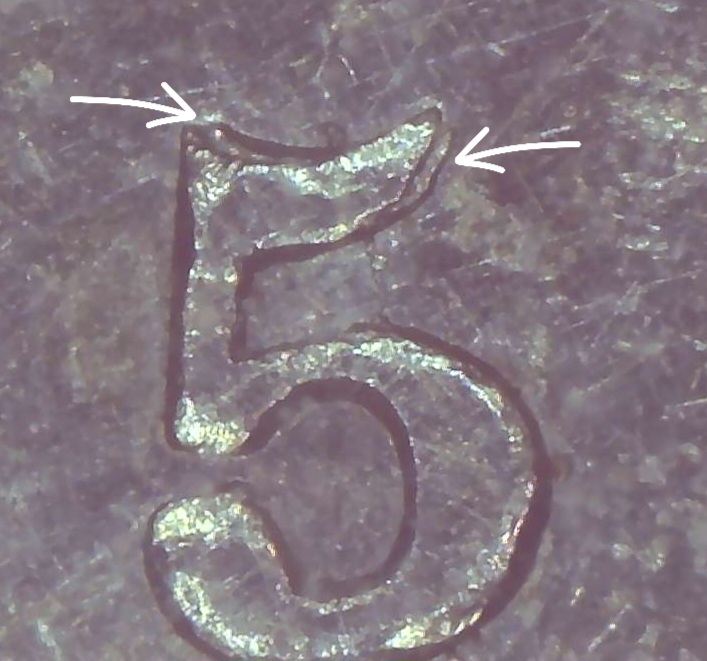
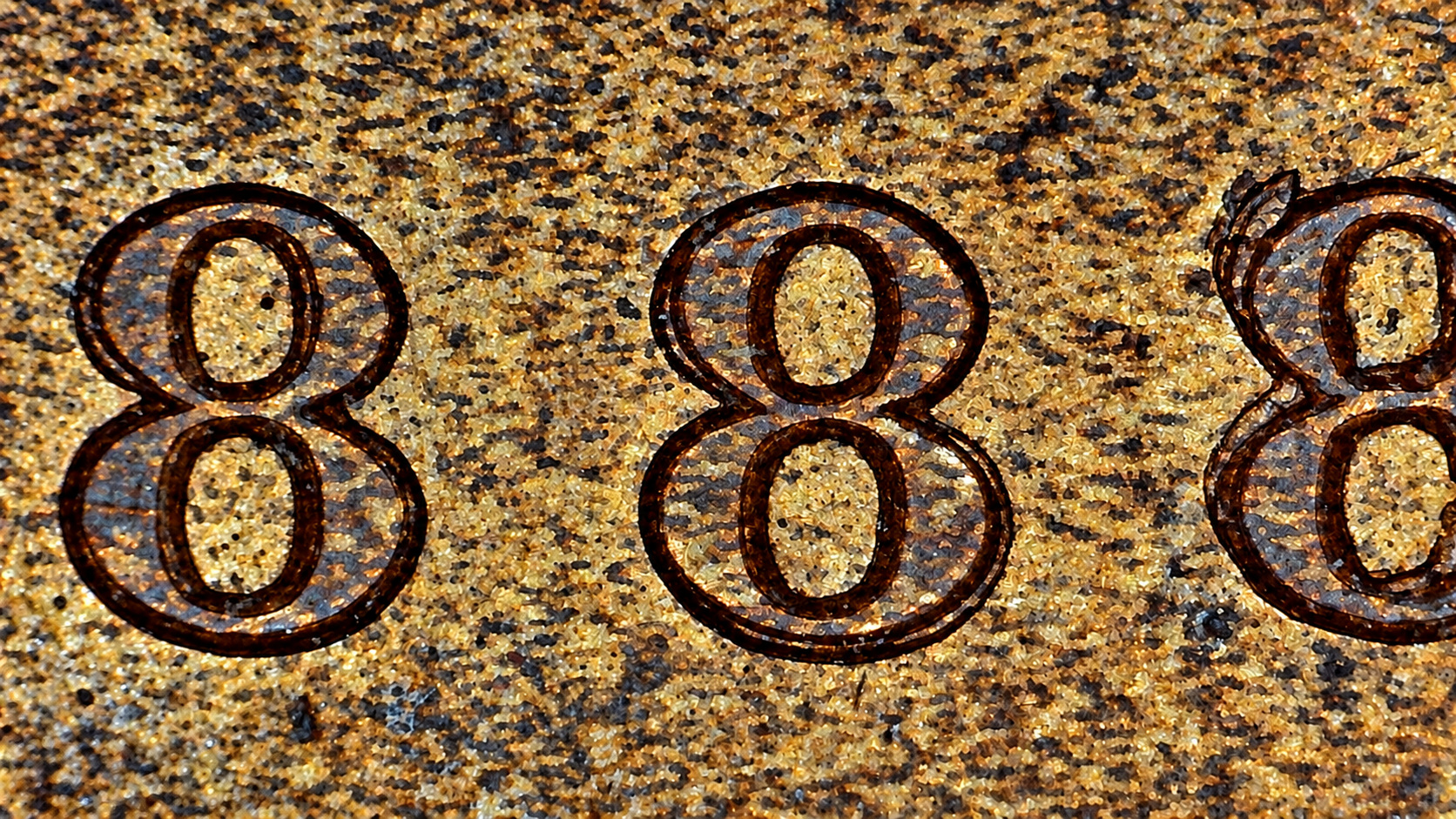
Die re-engraving describes manual alteration or restoration of details on an existing working die. Related terms include recutting, retooling and die repair. Although these terms sometimes overlap, they generally refer to work performed directly on the die to sharpen, restore, correct or modify design elements. An engraver might strengthen a weakened numeral, sharpen a letter, reconnect a broken vine loop or redefine a section of a wreath. Because the work was performed locally, the altered detail could differ from the original in shape, thickness, alignment or relief. Unlike repunching, which uses another impression from a punch, re-engraving involves cutting or modifying the die surface. When the altered die strikes additional coins, the distinctive correction may recur and provide evidence of a die variety. The exact process should not be inferred from appearance alone: polishing, die wear and other changes can create similar-looking features. The word “retooling” is also used for alterations made directly to a finished coin; those are post-mint modifications, not die varieties.
Intentional Design Types Versus Die Varieties
Not every collectible difference is accidental. A changed portrait, modified reverse, security feature, composition or other approved design can create a major type. Specialists may then identify several dies or sub-varieties within that type. CoinData should keep these levels distinct: design type, recognized variety, sub-variety and die state are related but not interchangeable categories.
What Does Not Automatically Qualify
A random die chip, ordinary late-stage erosion or common die crack does not automatically deserve the same status as a stable, attributable die variety. The collecting community may catalogue dramatic die states, and CoinData may record them where useful, but the database should not multiply CRNs for every transient mark produced as a die wears. The classification must reflect both repeatability and numismatic significance.
This educational series draws upon technical publications from the Royal Canadian Mint and U.S. Mint, supplemented by various numismatic references, published research and publicly available resources. Terminology and classification methods may differ among sources. CoinData evaluates these distinctions using observable physical evidence and established minting principles. Photographs illustrate actual coin characteristics; precise die attribution remains provisional unless independently verified.